Home / Blog / 2023 Blogs / How OCIANA™ Port Analytics Shapes Global Trade

How OCIANA™ Port Analytics Shapes Global Trade

Required to reduce port congestion?

Plan to mitigate the impact of shock on supply chain?

Need real time data insights to support decision making?

In global trade across the oceans, ports are recognised as vital nodes that connect nations and facilitate the movement of goods. However, there is an underlying challenge that is common to all maritime players: port congestion. GSTS provides transformational insights through OCIANATM Port Analytics and is instrumental in managing turbulent waters.

OCIANATM Port Analytics harnesses the power of big data and through its modeling capabilities, it provides real-time insights into port operations, enabling stakeholders to make informed decisions.

As a sample analysis, OCIANATM can guide a cargo vessel’s choice and guide the vessel to Port A. Despite congestion levels, historical vessel data and models produced by OCIANATM Port Analytics indicated Port A’s superior performance in minimizing wait times for vessels of similar specifications. This nuanced insight influenced the decision, resulting in the vessel’s successful and swift navigation through Port A. The example underscores the platform’s capacity to harness historical performance data, enabling informed choices that optimize supply chain efficacy and reinforce the platform’s instrumental role in shaping the future of maritime commerce.
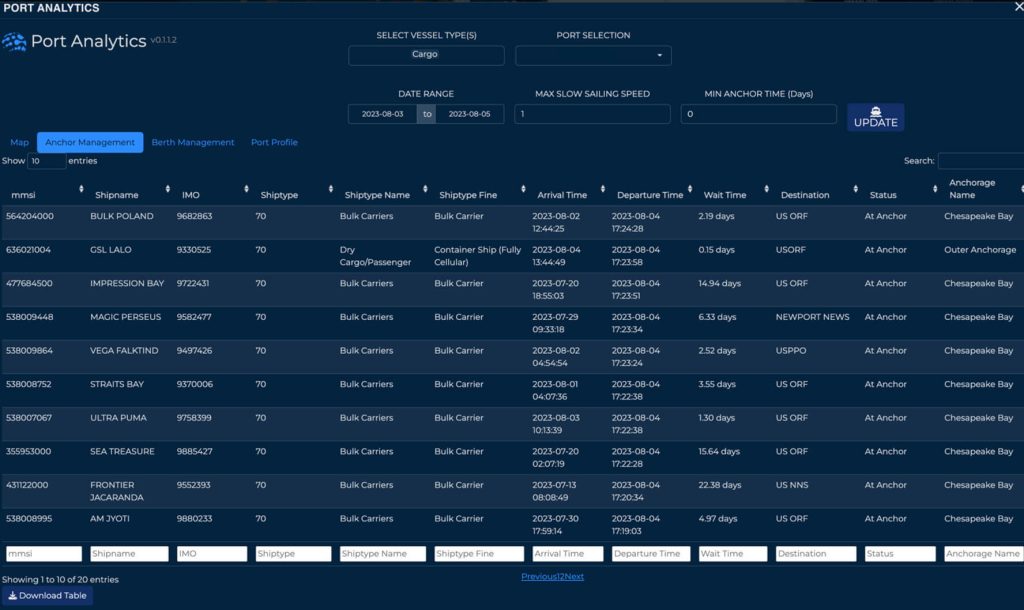

OCIANATM: Anchorage Wait Times Sample for Port A
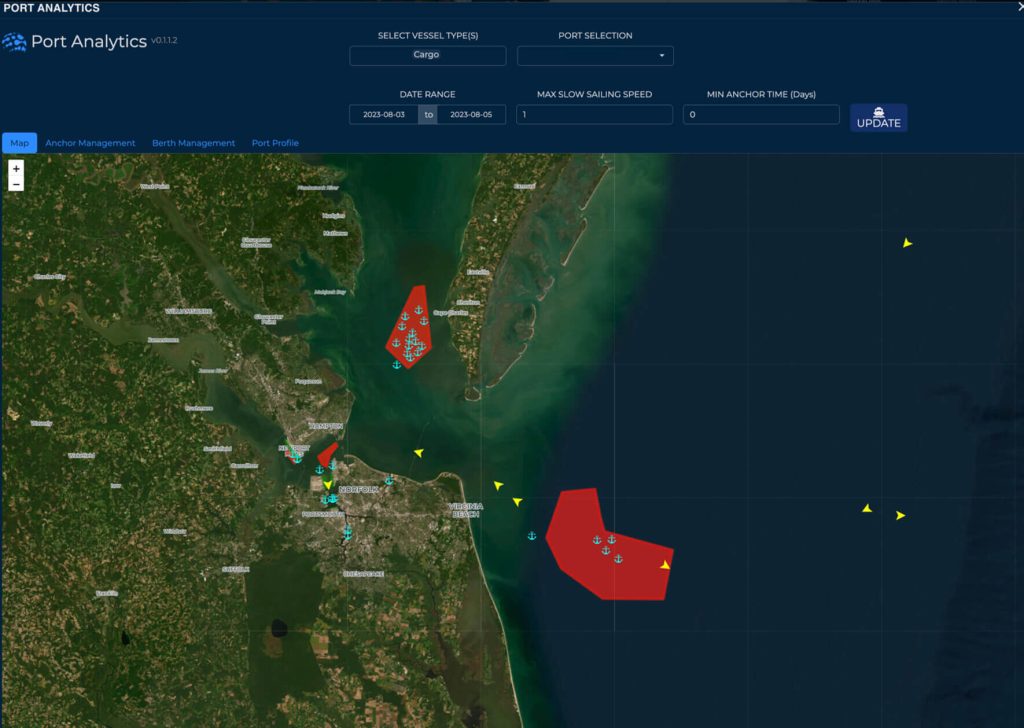
Port A: Sample Anchorage and Berth Layers

Benefits of OCIANATM Port Analytics

  • Single window into current wait times and traffic conditions at various ports for shipping lines, terminal operators, ports and pilotages
  • Enables stakeholders to adjust strategy in real-time, ensuring smoother traffic flow and reduced congestion
  • Facilitation of efficient and sustainable port selection for all maritime stakeholders
  • Monitoring of vessels in real-time to provide stakeholders with a comprehensive view of upcoming port operations, enabling them to make informed decisions
  • Leveraging historical vessel data, OCIANATM accurately models expected wait times, allowing for advanced planning and optimized resource allocation
  • Real-time and historical comparison between current and previous time periods within a port and between competitor ports: analysis and insights such as anchorage queue, occupied berths, and anticipated wait times
  • Mitigate increased costs, delayed shipments, and reduced product availability resulting in actively managed prices, potential shortages of everyday goods, and economic uncertainty

Contact GSTS for more information: sales@gsts.ca

Share This Article:

Turn port awareness into confidence, and credibility

Related Content

What Is Maritime Intelligence?

Global trade, national security, and environmental protection all depend on what happens at sea — often in ways…

March 2, 2026
12 min

What is C4ISR: Backbone of Modern Defence Operations

In the age of information warfare and network-centric operations, modern military and security forces rely on systems that…

February 23, 2026
14 min

Berth Productivity: Metrics That Really Matter for Modern Ports

Berth productivity — broadly defined as the container moves a terminal achieves while a vessel is alongside —…

December 8, 2025
7 min

Berthing in Shipping: How to Cut Congestion and Idle Time

Berthing in shipping is a critical stage in maritime logistics. A berth, where cargo is transferred, helps set…

December 3, 2025
10 min

Maritime Security: Insights from Canadian Seapower Conference

This year’s Canadian Seapower conference once again brought together senior leaders from the Royal Canadian Navy (RCN), the…

December 1, 2025
13 min

Critical Undersea Infrastructure: Trends, Threats, and Risks

Critical undersea infrastructure – subsea cables, pipelines, data links, and energy connectors – has become one of the…

November 27, 2025
7 min
en_USEnglish