
 / Supply Chain / ETA Prediction
ETA Prediction
Turn uncertain arrivals into accurate, actionable predictive port arrivals with OCIANA®.

Inaccurate Arrival Timelines Cost Ports and Their Partners
Every stakeholder along the port call chain, including harbour masters, terminal operators, pilots, tugs, rail operators, and shipping companies, plans around a vessel’s estimated time of arrival and departure.
When that estimate is wrong, the cost cascades: missed pilot windows, wasted labour and equipment, idle berths, and cargo that misses its onward connection.
Key challenges include:
- Static or manually updated ETAs that don't reflect real-time conditions
- Multiple, often conflicting ETA sources across terminals, agents, and vessels
- Weather, tides, and traffic that shift arrival windows with little notice
- Missed pilot, tug, and berth windows caused by late-breaking changes
- Incorrect destination information from vessel AIS, either because the signal wasn’t updated or because the UN LOCODE was improperly entered
- Limited visibility into ETD and downstream schedule impacts (rail, trucking, next port call)
- Lack of agreement for when vessels are arriving
- Pressure to accurately plan for labour, equipment, and terminal readiness further in advance.

Why ETA Predictions Matters
Improve Schedule Reliability
Compare predicted vs. actual arrivals and departures to reduce delay-driven disruption.
Optimize Resource Planning
Align labour, equipment, pilots, and tugs with accurate, continuously updated timelines.
Reduce Waiting and Anchorage Time
Support for sequencing arrivals against berth and terminal readiness to minimize idle time.
Support Pilot and Tug Scheduling
Feed dynamic scheduling tools with continuously refreshed, high-confidence ETAs.
Enable Data-Driven Decision Making
Use historical and real-time analytics to plan capacity and evaluate performance.
Enable Stakeholder Coordination
Give terminals, pilots, tugs, rail, and agents a shared, trusted arrival picture.
OCIANA®: Designed for Predictive Accuracy
Enhance ETA/ETD prediction by fusing AIS, vessel behaviour, weather, and port operational data with AI-driven forecasting to deliver a single, continuously updated estimate every stakeholder can trust.
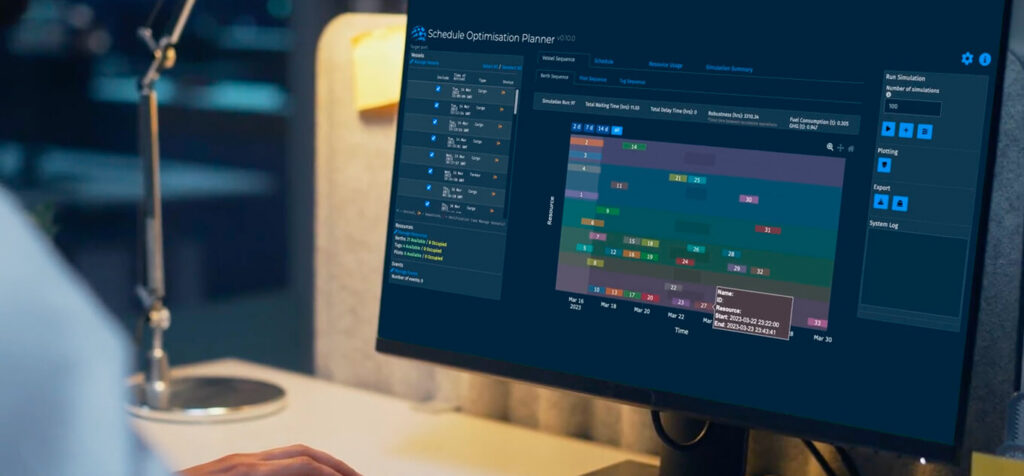
AI-Powered ETA and ETD Forecasting
Predict vessel arrivals and departures using AIS data, historical patterns, weather, and traffic conditions.
Continuous Real-Time Updates
Refresh predictions automatically as conditions change, rather than relying on static, manually entered estimates.
Alerts at Key Transit Points
Validate and update ETAs at pilot stations, locks, and checkpoints to capture changes in real time.
Active RTA Orchestration
Continuously calculate and communicate a Requested Time of Arrival at the Pilot Boarding Place, updated as conditions change, so masters can adjust speed with confidence that services will be ready.
Real-Time Key Timestamp Exchange
Digitally exchange ETC Terminal, ETC Bunkers, ETD/RTD/RTA Berth, and RTA Pilot Boarding Place timestamps across every stakeholder in the port call.
Standards-Based Data Exchange
Align to timestamp definitions and nomenclature from the IMO Compendium on Facilitation and Electronic Business and the Port Call Optimization Guidebook.
Multi-Stakeholder Visibility
Share a single, trusted arrival and departure picture across terminals, pilots, tugs, rail, and agents.
Integration with Port and Pilot Systems
Connect predictions directly into VTS, terminal operating systems, and pilot dispatch tools to reduce manual coordination.
API and Data Integration
Exchange real-time maritime data without the overhead of custom development.
Explore Predictive Port Arrivals
See how OCIANA® can help your port, terminal, or pilotage authority plan with confidence using accurate, real-time ETA and ETD predictions.
 English