
 / Supply Chain / Fleet & Voyage Operational Intelligence
Fleet & Voyage Operational Intelligence
Bring vessel movements, voyage progress and independently predicted arrival expectations into a connected operating experience with OCIANA®.

When Knowing Where Vessels Are Isn’t Enough
Shipping companies have access to increasingly sophisticated fleet dashboards that show vessel positions, destinations and reported ETAs.
The challenge is turning that information into an operational picture that helps teams understand what is changing, why it is changing and whether action is required, while the voyage is still unfolding.
Key challenges include:
- Reported ETAs that may not reflect developing weather, traffic or operational conditions
- Voyage changes that are difficult to identify before they affect schedules or operations
- Limited context around why a vessel is deviating from its expected route or timeline
- Vessel tracks, AIS updates, weather information and operational reports spread across multiple systems
- Teams spending time manually bringing together disparate information to understand what is happening
- Developing situations that may not trigger follow-up until the operational window to act has narrowed
- Limited ability to explain, after the fact, what changed during a voyage and why

Using Fleet & Voyage Operational Intelligence
See the Fleet
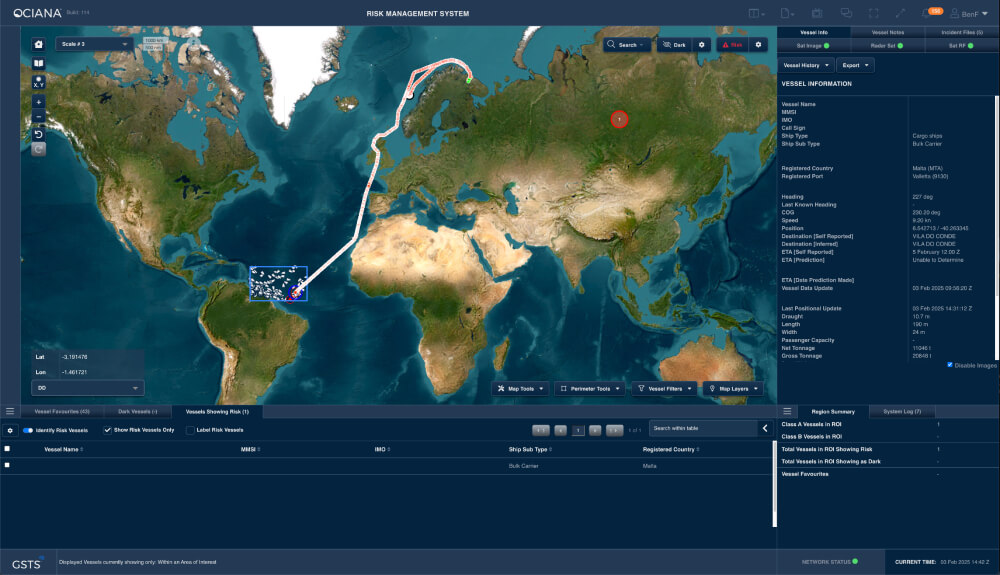
Start with a connected picture of vessel positions, voyages, destinations and arrival expectations. Operators can orient themselves across the fleet before opening an individual vessel for closer examination.
- Understand the current fleet situation from one operational workspace.
- Recognise where vessel and voyage information differs from expectation.
Focus Attention
An ETA difference or other relevant operational exception gives the team a reason to review one voyage first. Attention is directed toward the changing situation, rather than another round of manual checks across every vessel.
- Identify the vessel or voyage that warrants investigation.
- Move directly from fleet awareness to the relevant vessel view.
Investigate What Changed
The operator reviews how the vessel has moved, how the voyage has developed and which available signals provide useful context. Tracking history, deviations, stoppages, destination information and environmental conditions can help the team establish what is known and what still needs checking.
- Review movement and voyage history in context.
- Examine relevant exceptions and available supporting information.
- Keep the operator in control of interpretation and follow-up.
Assess Arrival Implications
Compare the vessel’s reported ETA with OCIANA’s own predicted ETA. When the estimates diverge, the team has an earlier basis for checking the latest voyage information and discussing the arrival outlook with the relevant stakeholders.
- See reported and predicted arrival expectations together.
- Understand ETA evolution and assess whether operational follow-up is needed.
- Use the intelligence to support, not automate, navigational or commercial decisions.
Preserve the Evidence
The value of the intelligence does not end when the operator closes the screen. Dynamic Voyage Reporting brings together a time-sequenced view of voyage development, movement and relevant events to support later operational review and informed commercial discussion.
- Review how the voyage unfolded and how arrival expectations changed.
- Retain independent voyage evidence for reporting and follow-up.
- Create a consistent reference for learning from completed voyages.
OCIANA®: Designed for Fleet & Voyage Operational Intelligence
Fuse real-time vessel intelligence, predictive ETA modelling, and independent voyage evidence into a single authoritative operational picture so fleet and voyage teams know what’s changing and what to do next.
AI-Powered ETA Prediction
Deliver the most accurate long-horizon, multi-stop ETA predictions for liner and tramp vessels alike, continuously refreshed as AIS, weather and traffic conditions change, rather than relying on a static, manually entered estimate.
Speed Advisory and Savings Insights
Translate updated arrival guidance into optimal speed recommendations, with visibility into potential fuel and emissions savings per voyage so slowing down with confidence replaces sailing fast then waiting.
Independent Voyage Reporting
Form an independent assessment of vessel reliability and voyage progress using historic and real-time data on ship movements and environmental factors, with weather and performance data available at configurable intervals and exportable at any time.
Intelligent Geofencing and Moving Haven
Apply configurable, machine-learning-enhanced geofences for high-accuracy passage predictability, and track a vessel’s movement along its planned path, including when it goes dark or stops sending AIS at the expected frequency.
Fleet and Voyage Analytics
Benchmark voyage and vessel performance against your own fleet or the wider market using data points including emissions, trade routes, port calls and tonnage, supporting evidence-based decisions on future voyage planning.
Make Port Calls Easier
Use our digital platform to submit booking requests, PAN and voyage information, pilot requests, and change requests electronically, reducing phone calls, paperwork, and email exchanges that slow arrival coordination.
Explore How to Optimize Your Maritime Fleets and Voyages
See how OCIANA® can help your fleet move beyond static ETAs and reactive tracking.
 English