Home / Blog / 2025 Blogs / Enhancing Decision-Making in Maritime Operations with GSTS’s OCIANA®

Enhancing Decision-Making in Maritime Operations with GSTS’s OCIANA®

The Challenges of Decision-making in Maritime Operations

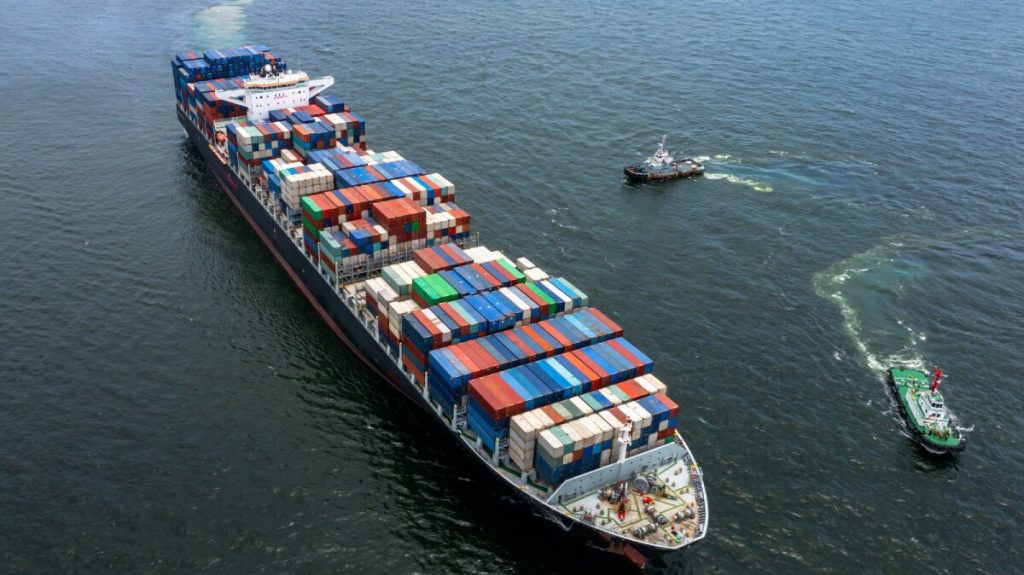
Maritime operations are critical to global trade, yet they are fraught with challenges that complicate decision-making. Ports are bustling hubs where timing is crucial, resources are limited, conditions can change rapidly and a single missed berthing window or pilot assignment can disrupt planning.

Traditional methods of managing these operations often fall short, leading to inefficiencies, delays and increased costs. In this complex environment, accurate and timely decision-making is vital for optimizing operations and ensuring smooth maritime traffic flow and supply chain resilience.

An insightful article titled “Data is the Catalyst for True Collaboration in Shipper-Carrier Partnerships”1 underscores the transformative power of data in fostering collaboration. This principle is particularly pertinent to the maritime industry, where effective data sharing between ports, shipping companies and other stakeholders can significantly enhance operational efficiency and decision-making.

Decision-making Capabilities of OCIANA®

Enter GSTS’s OCIANA® platform, a state-of-the-art solution designed to tackle the decision-making challenges in maritime operations. OCIANA® leverages advanced data analytics and artificial intelligence to provide real-time insights and predictive analytics, empowering maritime operators to make informed decisions swiftly.

OCIANA’s Collaborative Optimisation Solution

OCIANA’s latest Collaborative Optimisation Solution is a game-changer. By analyzing vessel schedules, cargo loads and port capacities using advanced AI algorithms, the platform ensures optimal berth allocation, significantly reducing wait times and maximizing throughput. For instance, during peak times, OCIANA’s AI algorithms can predict congestion and reassign berths in real time, ensuring smooth operations. This feature is essential for ports looking to improve their operational efficiency and reduce congestion.

Scheduling optimisation is another critical area where OCIANA® excels. The platform uses real-time data to suggest optimal routes and schedules for vessels, taking into account factors such as weather conditions, traffic density and port readiness. This capability not only enhances operational efficiency but also minimizes fuel consumption and reduces the environmental impact of maritime operations.
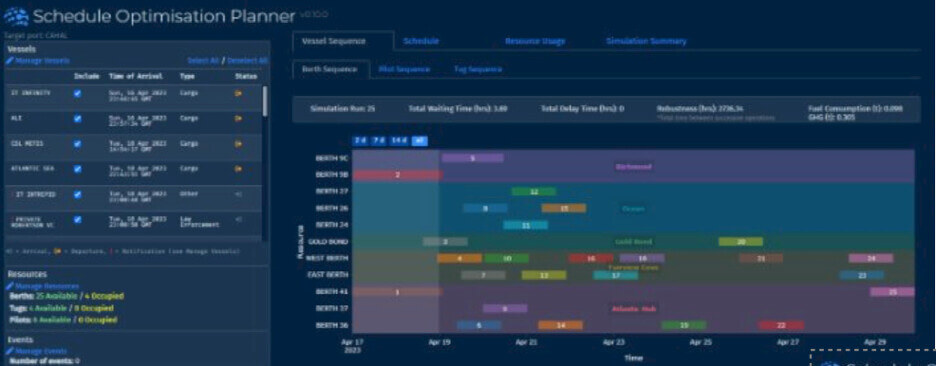
OCIANA’s Schedule Optimisation Planner

OCIANA’s real-time analytics are designed for a dynamic maritime environment where one small change can have cascading impacts. The platform continuously collects and processes data from multiple sources, providing operators with up-to-the-minute information based on various scenarios. This allows for proactive decision-making, enabling operators to anticipate and mitigate potential issues before they escalate. For example, if a storm is predicted, AI can be used to adjust schedules to minimize disruptions. These capabilities not only enhance operational efficiency but also foster rich, multi-party collaboration by sharing insights with all stakeholders in real-time.
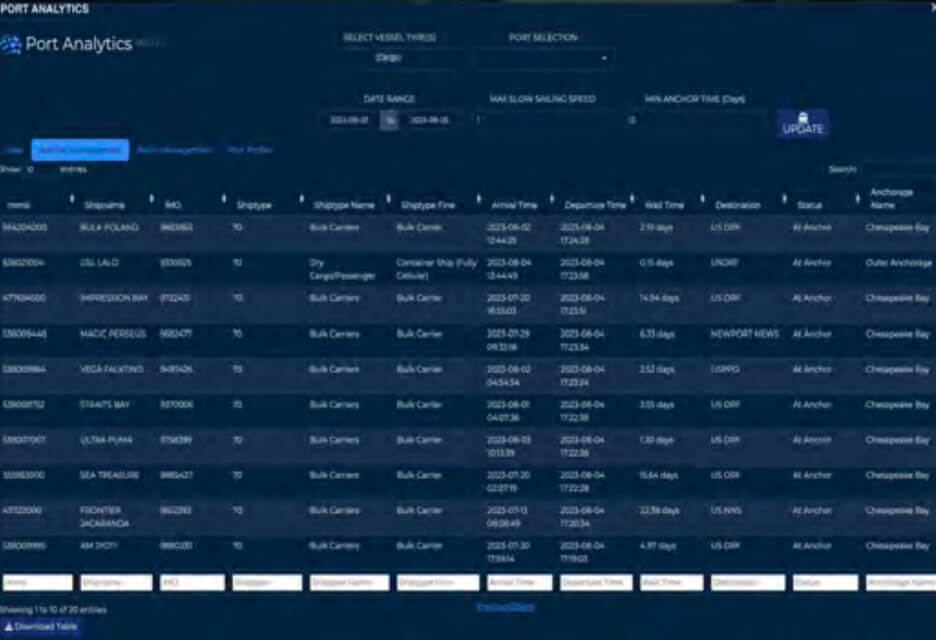
Real-time Analytics with OCIANA®

The Benefits of Improved Real-Time Decision-making for the Maritime Industry

The benefits of improved decision-making in maritime operations are manifold. Enhanced berth scheduling and optimized scheduling lead to reduced wait times, lower operational costs and a quantifiable reduction in harmful emissions. Real-time analytics allow for proactive management, minimizing disruptions and ensuring smooth operations. Moreover, the environmental benefits of reduced fuel consumption and emissions cannot be overstated.

GSTS’s OCIANA® platform is at the forefront of this transformation, offering a comprehensive solution that harnesses the power of data to enhance decision-making in maritime operations. As the industry continues to evolve, the adoption of advanced technologies like OCIANA® will be crucial in navigating the complexities of modern maritime logistics, ensuring efficiency, sustainability and resilience in global trade.

REFERENCES

[1] Dyke, Stephen. “Data Is The Catalyst for True Collaboration in Shipper-Carrier Partnerships”, 30 Oct. 2024, https://www.supplychainbrain.com/blogs/1-think-tank/post/40508-data-is-the-catalyst-for-true-collaboration-in-shipper-carrier-partnerships#:~:text=By%20using%20data%20transparently%20and,supply%20chain%20for%20the%20future.

Share This Article:

Turn port awareness into confidence, and credibility

Related Content

What Is Maritime Intelligence?

Global trade, national security, and environmental protection all depend on what happens at sea — often in ways…

March 2, 2026
12 min

What is C4ISR: Backbone of Modern Defence Operations

In the age of information warfare and network-centric operations, modern military and security forces rely on systems that…

February 23, 2026
14 min

Berth Productivity: Metrics That Really Matter for Modern Ports

Berth productivity — broadly defined as the container moves a terminal achieves while a vessel is alongside —…

December 8, 2025
7 min

Berthing in Shipping: How to Cut Congestion and Idle Time

Berthing in shipping is a critical stage in maritime logistics. A berth, where cargo is transferred, helps set…

December 3, 2025
10 min

Maritime Security: Insights from Canadian Seapower Conference

This year’s Canadian Seapower conference once again brought together senior leaders from the Royal Canadian Navy (RCN), the…

December 1, 2025
13 min

Critical Undersea Infrastructure: Trends, Threats, and Risks

Critical undersea infrastructure – subsea cables, pipelines, data links, and energy connectors – has become one of the…

November 27, 2025
7 min
en_USEnglish