Home » Users Supply
 / Supply Chain / Port Authorities
Turn maritime data into predictive and sustainable operations
Join maritime leaders using OCIANA® to navigate with certainty








From traffic monitoring to predictive port control

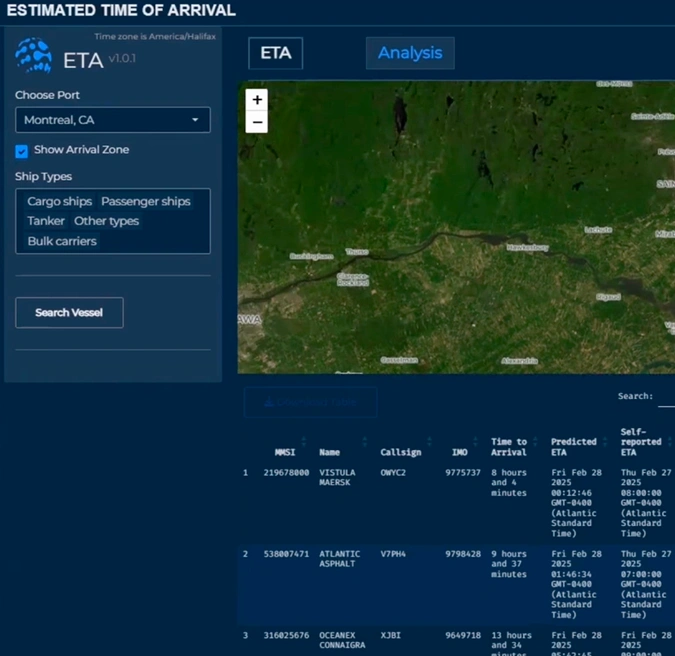
Safe Navigation and Vessel Flow
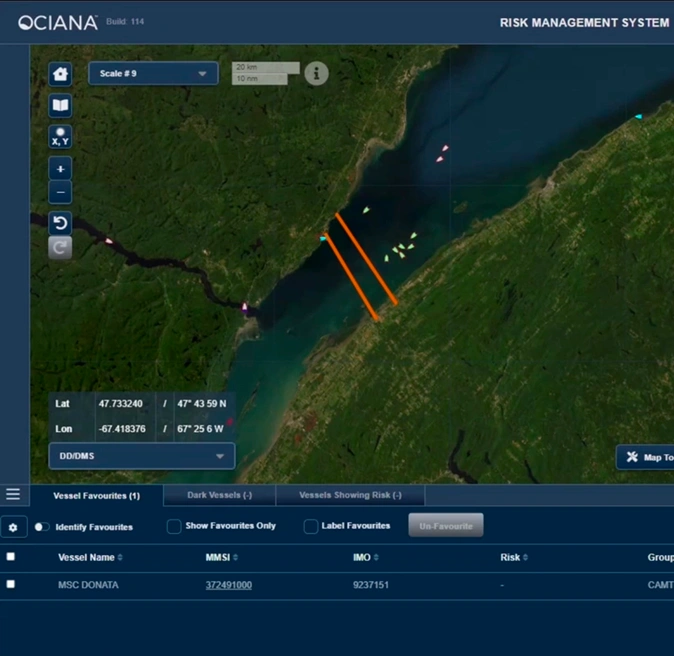
- Real-time visibility of all vessel movements in port waters
- Predictive ETAs and arrival sequencing to reduce congestion
- Anchorage management and berth-readiness alignment
- Advance coordination with pilots, tugs, terminals, and agents
- Early alerts for schedule disruption, late arrivals, or vessels with AIS turned off

Compliance, Oversight
and Reporting
- Monitoring speed limits and control zones (noise, emissions, species protection)
- Evidence-ready vessel track histories for audits, fines, or investigations
- Mandatory incident reporting support (e.g., spills, collisions, near-misses)
- Authoritative audit trails aligned with regulator expectations

Security Awareness and “Good
Neighbour” Obligations
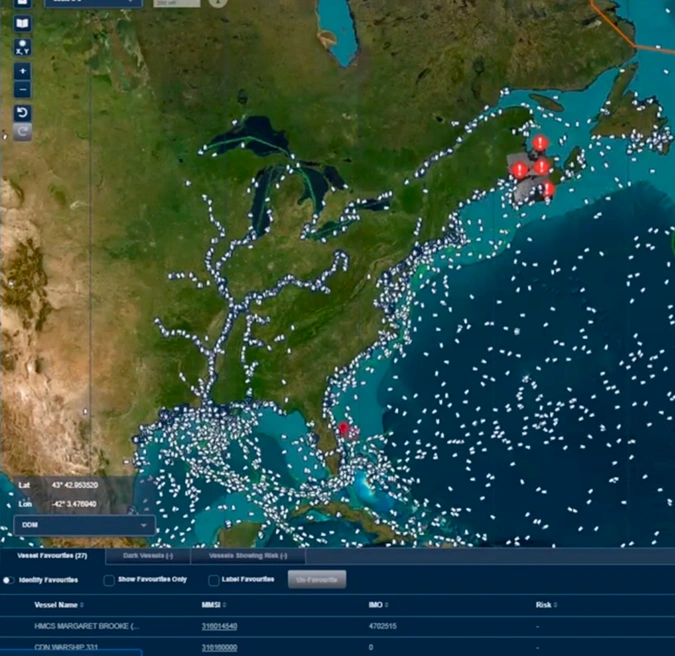
- Detect abnormal or suspicious vessel behaviour
- Identify AIS manipulation or unexpected “dark” arrivals
- Flag risks early to Coast Guard, CBSA, or security partners
- Maintain ISPS compliance and pass audits

Environmental Performance
and Sustainability
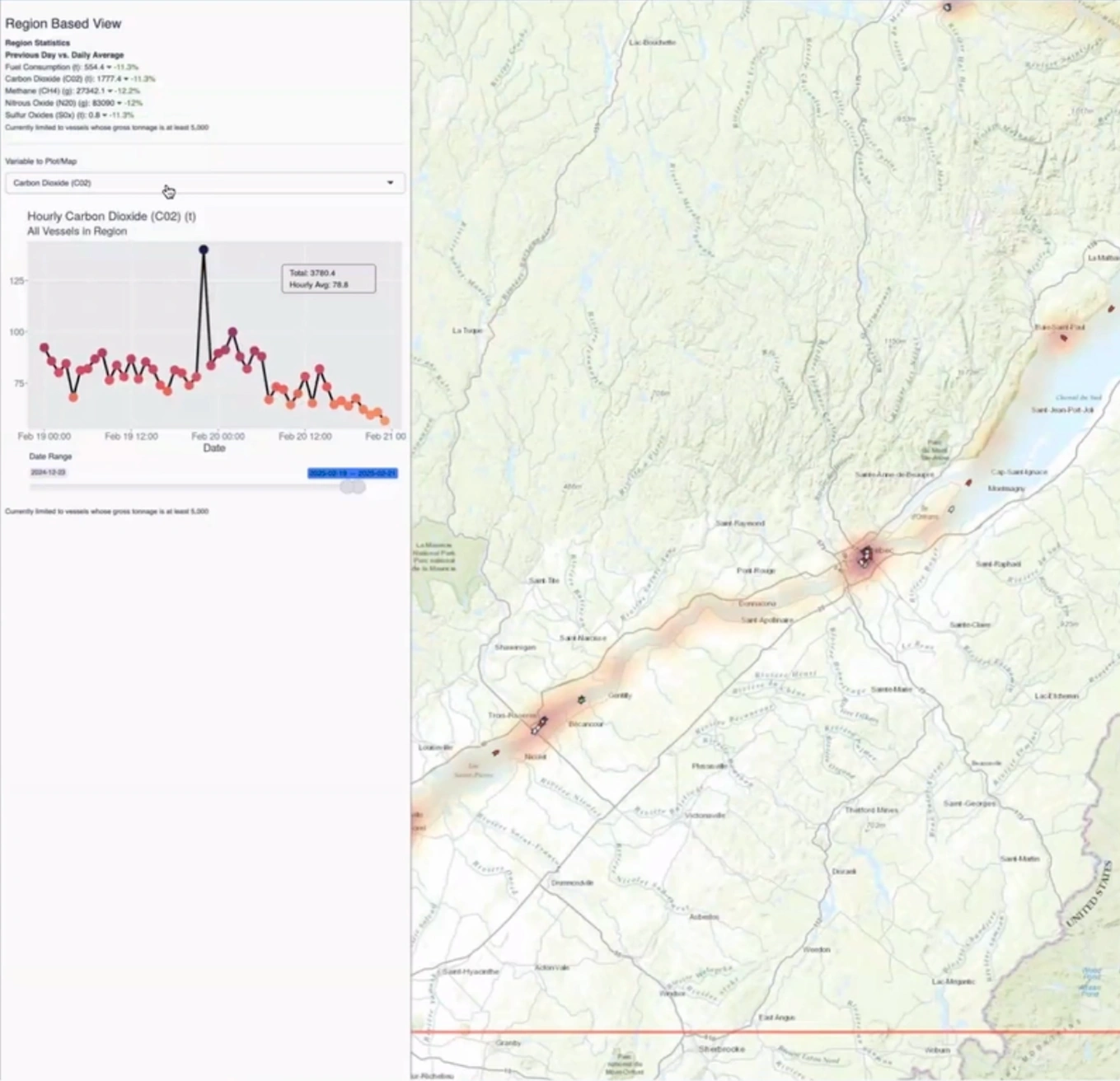
- Support emissions-reduction goals by minimizing idle time and congestion
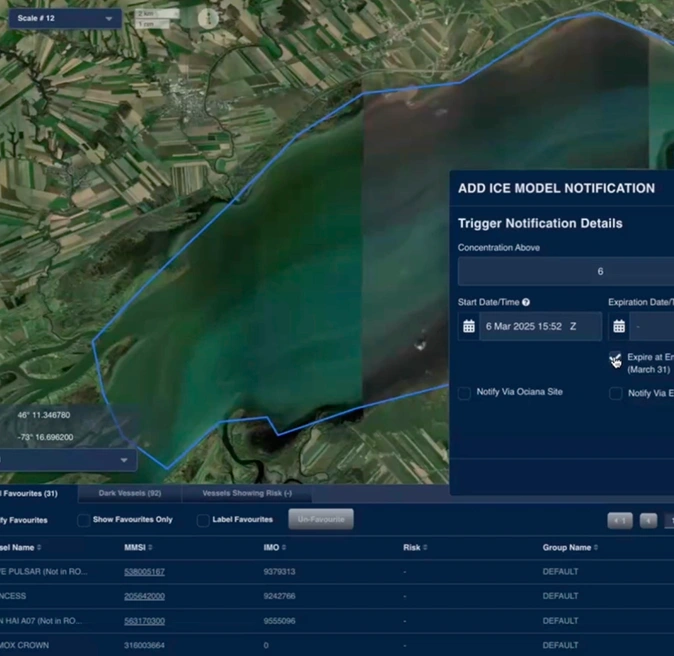
- Monitor vessel behaviour in environmental and speed-restricted zones
- Supply historical data for environmental enforcement and audits
- Support spill detection, assessment, and response coordination
- Enable reporting for green shipping corridors and sustainability initiatives

Stakeholder
Coordination
- Provide a shared, real-time operational picture so harbour masters, terminals, pilots, and service providers work from the same data.
- Enable role-based visibility and controlled information sharing for security, environmental, and regulatory partners.
- Maintain auditable collaboration records and decision timelines to support compliance, incident reviews, and government oversight.

Port Performance Optimization and Competitiveness
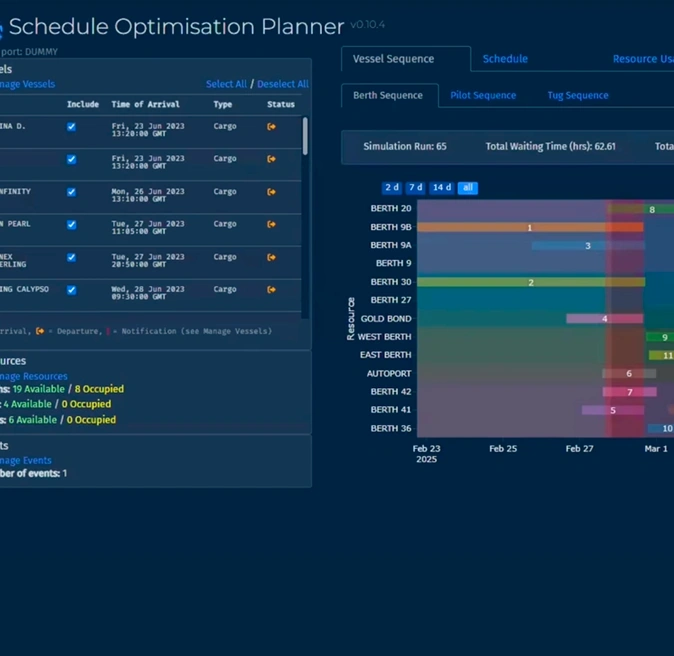
- Identify bottlenecks and delay drivers using historical and real-time analytics on wait times, dwell times, and berth occupancy.
- Improve schedule reliability and berth utilization through predictive ETAs and optimized vessel sequencing.
- Benchmark port performance against historical baselines or peer ports to support commercial discussions with shipping lines.

What makes OCIANA® different
OCIANA® offers strong data fusion, predictive analytics, and a collaborative environment.
Data Fusion
OCIANA harmonizes AIS, radar, satellite, environmental, and port-operational data into a single, authoritative operational picture for port authorities.
By resolving data gaps, inconsistencies, and timing mismatches that undermine legacy VTS and siloed port systems, OCIANA ensures every port role is working from the same trusted information.
This unified view supports safe navigation, accurate ETA prediction, congestion management, clearance verification, environmental monitoring, and evidence-ready reporting, all from one consistent source of truth.
Behaviour, Not Just Tracks
OCIANA harmonizes AIS, radar, satellite, environmental, and port-operational data into a single, authoritative operational picture for port authorities.
By resolving data gaps, inconsistencies, and timing mismatches that undermine legacy VTS and siloed port systems, OCIANA ensures every port role is working from the same trusted information.
This unified view supports safe navigation, accurate ETA prediction, congestion management, clearance verification, environmental monitoring, and evidence-ready reporting, all from one consistent source of truth.
Predictive, Actionable Intelligence
OCIANA harmonizes AIS, radar, satellite, environmental, and port-operational data into a single, authoritative operational picture for port authorities.
By resolving data gaps, inconsistencies, and timing mismatches that undermine legacy VTS and siloed port systems, OCIANA ensures every port role is working from the same trusted information.
This unified view supports safe navigation, accurate ETA prediction, congestion management, clearance verification, environmental monitoring, and evidence-ready reporting, all from one consistent source of truth.
Operational Today, Integration-Ready
Commonly asked questions
What types of port authorities is OCIANA designed for?
OCIANA is designed for civilian and maritime port authorities, including harbour master offices, port security departments, operations and supply chain teams, environmental management, and executive leadership. It supports both single-port deployments and multi-port or national port systems.
How is OCIANA different from a traditional VTS?
OCIANA harmonizes AIS, radar, satellite, environmental, and port-operational data into a single, authoritative operational picture for port authorities.
By resolving data gaps, inconsistencies, and timing mismatches that undermine legacy VTS and siloed port systems, OCIANA ensures every port role is working from the same trusted information.
This unified view supports safe navigation, accurate ETA prediction, congestion management, clearance verification, environmental monitoring, and evidence-ready reporting, all from one consistent source of truth.
Does OCIANA replace our existing VTS or port systems?
OCIANA harmonizes AIS, radar, satellite, environmental, and port-operational data into a single, authoritative operational picture for port authorities.
By resolving data gaps, inconsistencies, and timing mismatches that undermine legacy VTS and siloed port systems, OCIANA ensures every port role is working from the same trusted information.
This unified view supports safe navigation, accurate ETA prediction, congestion management, clearance verification, environmental monitoring, and evidence-ready reporting, all from one consistent source of truth.
How does OCIANA support regulatory compliance and audits?
Can OCIANA help with environmental and emissions objectives?
How does OCIANA handle “dark” or AIS-off vessels?
Who within the port authority uses OCIANA?
How does OCIANA support stakeholder collaboration?
What data sources can OCIANA ingest?
Is OCIANA secure and compliant with government requirements?
How does OCIANA help ports stay competitive?
OCIANA harmonizes AIS, radar, satellite, environmental, and port-operational data into a single, authoritative operational picture for port authorities.
By resolving data gaps, inconsistencies, and timing mismatches that undermine legacy VTS and siloed port systems, OCIANA ensures every port role is working from the same trusted information.
This unified view supports safe navigation, accurate ETA prediction, congestion management, clearance verification, environmental monitoring, and evidence-ready reporting, all from one consistent source of truth.
 English