
 / Supply Chain / JIT Arrivals
Just-In-Time (JIT) Arrivals

Time to Retire “Sail Fast Then Wait” Method
Ports, terminals, pilots, and shipping companies are expected to enable just-in-time arrivals. However, realizing the full benefits requires ships to have confidence that adjusting speed will not jeopardize marine services or commercial obligations.
Key challenges include:
- Fragmented data sharing, including manual exchange of key timestamps across terminals, ships, pilots, tugs, and ports
- Limited trust between charterers, terminals, and ports discourages sharing of real-time updates
- Contractual barriers, such as charter party agreements, can prevent ships from adjusting speed
- JIT arrival cannot succeed without first optimizing the underlying port call

Why JIT Arrival Matters
Cut Fuel Consumption and Emissions
Give ships early, reliable notice of RTA Pilot Boarding Place so they can optimize speed instead of sailing at full speed only to wait.
Reduce Anchorage Waiting Time
Ships spend up to 9% of their time waiting at anchorage; JIT arrival cuts unscheduled dwell rather than shifting it further out to sea.
Orchestrate, Not Just Predict
Actively synchronize berth, fairway, and nautical service readiness instead of stopping at a passive arrival estimate.
Avoid the Hurry-Up-and-Wait Trap
Ensure a slower voyage shortens total waiting time, so speed reductions don’t undermine adoption.
Align Every Stakeholder on One Timestamp
Synchronize the Requested Time of Arrival at the Pilot Boarding Place across port authority, terminal, pilots, tugs, and ship.
Strengthen Port Competitiveness
Ports that reliably deliver JIT arrival become preferred calls for GHG-conscious shipping lines.
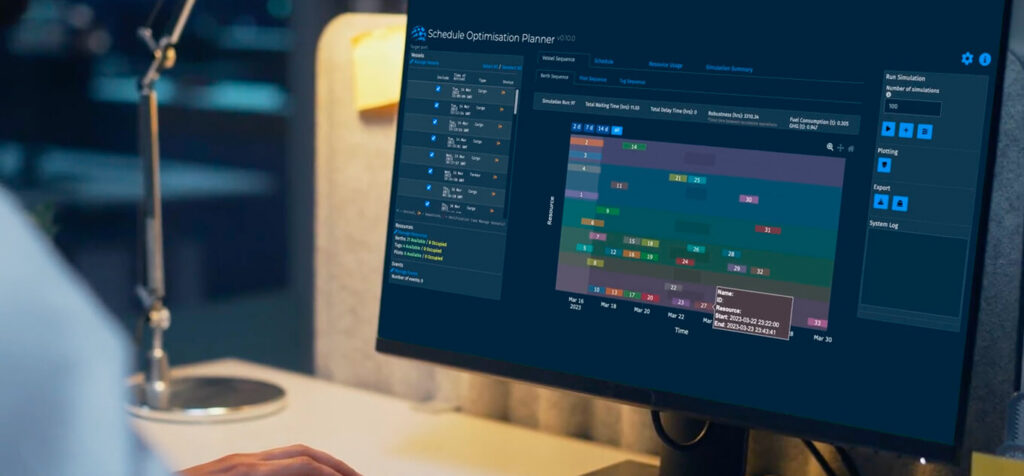
OCIANA®: Designed for JIT Arrival
Enable true just-in-time arrival by fusing real-time vessel intelligence, port call timestamps, and AI-driven speed orchestration into a single authoritative operational picture.
Active RTA Orchestration
Continuously calculate and communicate a Requested Time of Arrival at the Pilot Boarding Place, updated as conditions change, so masters can adjust speed with confidence that services will be ready.
Real-Time Key Timestamp Exchange
Digitally exchange ETC Terminal, ETC Bunkers, ETD/RTD/RTA Berth, and RTA Pilot Boarding Place timestamps across every stakeholder in the port call.
Integrated Port Call Optimization
Because JIT arrival depends on an optimized port call, OCIANA fuses berth planning, terminal readiness, and nautical service availability into a single sequencing engine.
Standards-Based Data Exchange
Align to timestamp definitions and nomenclature from the IMO Compendium on Facilitation and Electronic Business and the Port Call Optimization Guidebook.
Speed Advisory and Savings Insights
Translate updated RTA Pilot Boarding Place data into optimal speed recommendations, with visibility into potential fuel and emissions savings per voyage.
Role-Based Coordination and API Access
Enable secure, shared visibility across port authorities, terminals, pilots, tugs, agents, and shipping lines, with API and web access for integration without custom development.
Port Analytics and Notifications
Proactive notification of berth delays or early availability, based on live schedule changes from vessels at berth and incoming traffic, so arrivals can be timed for Just-in-Time (JIT) port calls
Explore Smarter JIT Arrivals
See how OCIANA® can help your port or shipping line move beyond ETA prediction to true just-in-time arrival, reducing fuel burn, emissions, and time at anchorage.
 English